
Batu Bolong, Canggu: A Local Villa Guide
If someone pictures “Canggu” without ever having been there, they’re almost certainly picturing Batu Bolong. This is the neighborhood that put Canggu on the map — surfboards leaning against café walls, a beach break that taught a generation of digital nomads to surf, and a walkable strip where the beach, the coffee, and the coworking desk are all within a few minutes of each other. It’s also, honestly, the busiest and most built-up of Canggu’s three main pockets, and worth understanding in full before you commit to basing yourself right in the middle of it.
The character of Batu Bolong
Batu Bolong centers on Jalan Batu Bolong, running from the main Canggu shortcut road down to the beach, bordered by Berawa to the east and Nelayan to the west. This is, without much debate, the most central and busiest part of Canggu — everything sits within walking distance: the beach, the cafés, the shops, the coworking spaces. If your ideal Canggu day involves stepping out your door and having everything immediately at hand, this is the neighborhood built for exactly that.
The area’s identity traces back to the mid-2000s and the original Old Man’s beach bar — one of the first venues in the area to serve cold beer and live music directly on the sand, which drew a growing community of surfers and long-stay travelers and effectively put this stretch of coastline on the world surf and digital-nomad map. That origin story still shapes the neighborhood’s energy today: genuinely social, surf-first, and built around a community that spends its days moving fluidly between the water, a café, and a coworking desk.
Old Man’s Beach: the heart of it all
The beach itself — formally Batu Bolong Beach, commonly called Old Man’s Beach after the bar — stretches roughly 800 meters of black volcanic sand, running from the ancient Pura Batu Bolong temple at its southern end up toward the cliffs above Echo Beach to the north. The temple itself is a genuine, worth-seeing landmark — perched on a rocky outcrop at the beach’s edge, it adds real cultural weight to what’s otherwise a thoroughly modern, surf-and-café scene.
The wave here is a wide, forgiving beach break on a sand bottom — genuinely well suited to beginners and longboarders, and a large part of why this stretch became Canggu’s original surf hub. If you’re learning to surf for the first time anywhere in the wider Canggu area, this is the beach most consistently recommended for it.
One honest safety note worth taking seriously: despite the beginner-friendly wave, swimming conditions at Batu Bolong Beach carry real risk — there are no lifeguards, and the area is known for strong riptides that can catch even experienced swimmers off guard. If you’re not surfing (where the activity itself keeps you more aware and positioned appropriately), casual swimming here deserves genuine caution, and sticking to your villa’s pool is the safer choice for young children or less confident swimmers.
The café and coworking scene
This is genuinely one of the densest concentrations of digital nomads and remote workers in Asia, and it shows in the infrastructure. Dojo Bali — the area’s largest coworking space, with strong, reliable internet — anchors the scene, alongside Tropical Nomad Coworking and Outpost Canggu, giving remote workers a genuine choice of dedicated workspaces rather than relying purely on café WiFi. Day passes are generally affordable, with monthly memberships available for longer stays. Cafés throughout the strip serve double duty as informal workspaces too, though it’s worth knowing that WiFi at cafés specifically can dip during peak hours — for anything requiring genuinely reliable connectivity, a dedicated coworking space is the safer bet over a café table.
Beyond work, the café culture here is exactly what’s made Canggu famous internationally — a dense strip of coffee roasters, health-conscious brunch spots, and casual restaurants, alongside local warungs tucked just off the main strip for authentic, better-value Indonesian food.
Nightlife and evenings
Batu Bolong offers Canggu’s most genuine nightlife concentration. Old Man’s itself remains a nightlife fixture with live DJs and a late-running crowd, and nearby Mexicola offers a similarly lively, open-till-late scene. Sunset specifically draws real crowds to the beachfront bars and cafés overlooking the water — arriving 30–60 minutes before sunset is genuinely worth it if you want a good seat, since the best-positioned spots fill up quickly.
Getting around: the honest picture
Within Batu Bolong, walking is genuinely the primary way to get around — this is the most walkable of Canggu’s three main neighborhoods, with the beach, cafés, shops, and coworking spaces all realistically reachable on foot from most accommodation in the area.
From the airport, expect roughly 30–50 minutes in reasonable traffic, though this can extend further during peak periods — broadly consistent with the wider Canggu area, and one of the more accessible entry points into the neighborhood cluster given its central position.
Getting to neighboring areas — Berawa to the east, Pererenan or Echo Beach to the north — is a short scooter ride, though it’s worth budgeting real time given how busy the connecting roads (including the notorious Canggu Shortcut toward Berawa) can get during peak hours.
Accommodation and price positioning
Batu Bolong offers accommodation across a genuinely wide range, though — consistent with its central, high-demand position — it tends to command more than quieter Pererenan for comparable properties. Budget guesthouses and homestays exist alongside boutique mid-range hotels directly on Jalan Batu Bolong, up through heritage-style luxury properties. For private villas specifically, our full pricing guide covers realistic ranges across Canggu and how they compare to the area’s other neighborhoods — as a general pattern, Batu Bolong’s prime central position carries something of a premium over Pererenan’s quieter, more spacious alternative for a comparable villa style.
Who Batu Bolong genuinely suits
First-time visitors to Canggu who want to experience its defining energy directly, without needing a scooter to reach the area’s most iconic spots.
Digital nomads and remote workers wanting the strongest coworking and café infrastructure in the wider Canggu area, all within walking distance of accommodation.
Beginner surfers, given Old Man’s Beach’s genuinely forgiving, well-suited-to-learning wave.
Solo travelers and younger groups wanting a social, walkable base with strong nightlife and an easy way to meet other travelers.
Anyone who wants to be in the middle of Canggu’s energy, rather than adjacent to it — Batu Bolong is Canggu at its most concentrated and immediate.
Honest trade-offs: who might prefer Berawa or Pererenan instead
In keeping with this whole series’ commitment to real trade-offs rather than a one-sided pitch: Batu Bolong is genuinely the busiest and most built-up of Canggu’s three main neighborhoods, and that comes with real crowding — particularly around sunset, when the beachfront gets genuinely packed, and on weekends generally.
If you want quieter evenings and more space, our Pererenan guide covers Canggu’s calmer, more rice-field-adjacent alternative just north.
If you specifically want beach-club culture rather than Batu Bolong’s more casual surf-bar energy, Berawa’s FINNS and Atlas beach clubs offer a different, more polished evening scene — see our Berawa guide for the full picture.
If swimming safety is a priority for your group — particularly with young children — Batu Bolong’s riptide risk is worth weighing seriously; a villa with strong private pool space matters more here than in areas with calmer, more supervised swimming conditions.
If you’re sensitive to noise or crowds, Batu Bolong’s central, high-energy position is the opposite of what you’re likely looking for — the wider Canggu guide’s neighborhood comparison can help you find a better-suited pocket.
Quick reference: Frequently Asked Questions
What is Batu Bolong known for? It’s Canggu’s original surf-and-café hub, centered on Old Man’s Beach and Jalan Batu Bolong — the most central, walkable, and busiest of Canggu’s three main neighborhoods.
Is Old Man’s Beach good for beginner surfers? Yes — it’s a wide, forgiving beach break on a sand bottom, widely considered the most beginner-friendly wave in the wider Canggu area.
Is it safe to swim at Batu Bolong Beach? Caution is genuinely warranted — there are no lifeguards, and the area is known for strong riptides that can affect even experienced swimmers. Surfing (where you’re actively engaged and positioned) carries different risk than casual swimming.
Is Batu Bolong walkable? Yes, genuinely the most walkable of Canggu’s three main neighborhoods — the beach, cafés, shops, and coworking spaces are almost all reachable on foot.
Is Batu Bolong good for digital nomads? Yes — it has some of the strongest coworking infrastructure in Canggu, including Dojo Bali, Tropical Nomad Coworking, and Outpost Canggu, alongside a dense café scene.
Is Batu Bolong busy? Yes — it’s the busiest and most built-up of Canggu’s three main neighborhoods, particularly around sunset and on weekends.
Which Canggu neighborhood should I choose if I want it quieter? Pererenan, just north, offers a genuinely calmer, more rice-field-adjacent alternative within the same wider Canggu area.
Ready to see real Batu Bolong villas? Browse our Canggu-area collection here, filterable by neighborhood, or get in touch with our team if you’d like help finding a villa in the right pocket of Canggu for your trip.
Related Reads
- Where to Stay in Bali: The Complete Villa Area Guide
- Staying in Canggu: The Complete Villa Guide
- Pererenan, Canggu: A Local Villa Guide
- Berawa, Canggu: A Local Villa Guide
- Batu Bolong, Canggu: A Local Villa Guide

Berawa, Canggu: A Local Villa Guide
If Pererenan is Canggu’s quieter cousin, Berawa is its polished, beach-club-driven core — home to some of the most famous names in Bali’s beach club scene, a genuinely well-developed restaurant and accommodation landscape, and a noticeably busier, more built-up feel than the rice-field pockets to its north. This is the Canggu neighborhood most closely associated with the area’s international beach-club reputation, and it’s worth understanding exactly what that means day to day before you book here specifically.
The character of Berawa
Berawa sits south of central Canggu’s Batu Bolong strip, centered around Jalan Pantai Berawa — literally “Berawa Beach Road” — which runs from the main Canggu-Denpasar corridor down to the sand. Unlike Pererenan’s still-rural feel, Berawa is genuinely well developed: a dense concentration of restaurants, bars, and accommodation ranging from hostels to luxury villas, all built around one clear anchor — Berawa Beach, home to some of the most recognized beach club names on the island.
FINNS Beach Club is the headline venue here, a large, internationally known complex that draws serious crowds — genuinely one of Bali’s most famous beach clubs, with a purpose-built resort (FINNS Resort Bali) opening alongside it. Atlas Beach Club sits right next door on Jalan Pantai Berawa, an equally striking, large-scale venue with its own devoted following. Vue Beach Club offers a more affordable alternative nearby, and Café del Mar anchors the area’s sunset-drinks scene a little further along the coast. Together, these venues make Berawa the single most concentrated beach-club stretch in the wider Canggu area — genuinely more so than Batu Bolong, and considerably more than quieter Pererenan.
What that concentration actually means for your stay
This is worth being direct about, since it shapes the whole character of a Berawa-based trip: Berawa Beach and Jalan Pantai Berawa get genuinely busy, especially around sunset and on weekends. The area draws both tourists and locals in real numbers, and the energy reflects that — this is Canggu at its most socially active and polished, not its quietest. If a buzzing beach-club scene right on your doorstep is exactly what you want, that’s Berawa’s clearest strength. If you’re hoping for a quiet, low-key evening without much effort, you’ll want to either time your visits deliberately (weekday afternoons are considerably calmer than weekend sunsets) or base yourself in Pererenan instead and visit Berawa when you want the energy.
One genuinely pleasant detail worth knowing: Berawa Beach is pet-friendly, and it’s common to see dogs on the sand alongside sunbathers and surfers — a small but real part of the area’s relaxed, social character.
Getting around: the honest picture
Jalan Pantai Berawa itself is walkable — if your villa sits along or near this road, walking to the beach, restaurants, and beach clubs is genuinely realistic, more so than in Canggu’s more spread-out northern pockets. This is one of Berawa’s clearest practical advantages over Pererenan, where a scooter is more often needed to cover the same range of options.
The “Canggu Shortcut” — a narrow connecting road between Berawa and the Batu Bolong/Nelayan area — is notorious locally for heavy, sometimes genuinely frustrating traffic jams, particularly during peak hours. If you’re planning to move between Berawa and central Canggu regularly during your stay, build real buffer time into your plans rather than assuming a quick hop.
From Seminyak or Petitenget, Berawa is a relatively short trip — commonly cited around 20 minutes in light traffic — making it a genuinely practical base if you want proximity to both Canggu’s beach-club scene and Seminyak’s dining and shopping.
From the airport, expect a range broadly similar to the wider Canggu area — roughly 40–90 minutes depending on traffic and time of day, though this can vary meaningfully; sunset-hour arrivals in particular should budget extra time given how busy the connecting roads get.
Surf conditions: know before you go
Berawa Beach offers a real, popular surf break, but it’s worth being specific rather than assuming it’s uniformly beginner-friendly: waves here can be strong and genuinely unpredictable, generally better suited to experienced swimmers and surfers than complete beginners. If you’re learning to surf for the first time, Old Man’s Beach at Batu Bolong (a short trip north) is the more forgiving, established beginner spot in the wider Canggu area — worth knowing if surf lessons are part of your plan, so you’re not caught off guard by conditions that are more demanding than expected.
The dining and café scene
Berawa’s restaurant density is genuinely strong, spanning everything from casual warungs to more polished international dining, concentrated particularly along and around Jalan Pantai Berawa itself. The area’s café culture, while perhaps slightly less concentrated than Batu Bolong’s specific café-hopping reputation, still offers a solid range of options, and Berawa’s proximity to both central Canggu and Seminyak means residents and visitors here have genuinely easy access to both areas’ dining scenes without committing fully to either.
Who Berawa genuinely suits
Travelers who want beach-club energy as a central part of their trip — few places in Bali concentrate this much beach-club culture into one walkable stretch.
Longer-stay visitors and digital nomads who want a well-developed, amenity-rich base with strong restaurant variety and genuine walkability, without needing to rely on a scooter for daily essentials.
Travelers who want a middle ground between Canggu’s energy and Seminyak’s polish — Berawa’s relatively short trip to Seminyak makes it a genuinely practical base for guests who want easy access to both.
Social groups and couples wanting an active, lively holiday atmosphere with strong nightlife and dining options close at hand.
Pet owners traveling with dogs, given Berawa Beach’s pet-friendly reputation.
Honest trade-offs: who might prefer Pererenan or Batu Bolong instead
In keeping with the honesty this whole series is built around: Berawa is genuinely busier and more built-up than Pererenan, and its beach and main road see real crowds, especially at sunset and on weekends — if you’re hoping for Canggu’s quieter, more rice-field-adjacent side, our Pererenan guide will likely suit you better.
The Canggu Shortcut’s traffic is a genuine, frequently mentioned frustration for anyone moving regularly between Berawa and central Canggu — factor this into your plans rather than assuming quick transfers.
Surf conditions at Berawa Beach itself are less forgiving than Batu Bolong’s Old Man’s Beach — if beginner-friendly waves right at your doorstep matter to your trip, that’s worth weighing before choosing Berawa specifically for its surf access.
If you want the most walkable, café-dense core of Canggu proper, Batu Bolong remains the more centrally social choice — see our full Canggu villa guide for the complete comparison of all three neighborhoods.
Quick reference: Frequently Asked Questions
What is Berawa known for? Its beach clubs — FINNS Beach Club and Atlas Beach Club are the area’s headline venues, alongside Vue Beach Club and Café del Mar for sunset drinks, making it the most concentrated beach-club stretch in the wider Canggu area.
Is Berawa walkable? Yes, along and near Jalan Pantai Berawa itself — more walkable than Canggu’s more spread-out northern pockets, though a scooter or driver is still useful for reaching central Canggu or Seminyak.
Is Berawa Beach good for beginner surfers? Not primarily — waves here can be strong and unpredictable, generally better suited to more experienced surfers. Old Man’s Beach at Batu Bolong is the more established beginner spot nearby.
How far is Berawa from Seminyak? Roughly 20 minutes in light traffic, making it a relatively convenient base between Canggu’s beach-club scene and Seminyak’s dining and shopping.
Is Berawa busy? Yes, genuinely — Berawa Beach and its main road see real crowds, particularly around sunset and on weekends, reflecting its status as home to some of Bali’s most famous beach clubs.
Is Berawa pet-friendly? Yes — Berawa Beach has a notably relaxed, pet-friendly reputation, and dogs are a common sight on the sand.
Which Canggu neighborhood should I choose instead if I want it quieter? Pererenan, just north, offers a genuinely calmer, more rice-field-adjacent alternative while remaining part of the same wider Canggu area.
Ready to see real Berawa villas? Browse our Canggu-area collection here, filterable by neighborhood, or get in touch with our team if you’d like help finding a villa near Berawa’s beach-club scene or elsewhere in Canggu.
Related Reads
- Where to Stay in Bali: The Complete Villa Area Guide
- Staying in Canggu: The Complete Villa Guide
- Pererenan, Canggu: A Local Villa Guide
- Berawa, Canggu: A Local Villa Guide
- Batu Bolong, Canggu: A Local Villa Guide

Pererenan, Canggu: A Local Villa Guide
If Canggu’s Batu Bolong strip is the version most people picture before they arrive — cafés, surfboards, constant foot traffic — Pererenan is the quieter cousin just north of it, where rice fields still run between the villas and the beach stays mostly local even on a busy weekend. It’s part of the same wider Canggu ecosystem, but the day-to-day feel is genuinely different, and worth understanding on its own terms rather than as an afterthought to the main Canggu guide.
The character of Pererenan
Pererenan sits directly north of Canggu proper, close enough that the two blur into each other on a map — a short stroll up Canggu’s black-sand beach, or a five-minute scooter ride through a rice-field shortcut from busy Jalan Batu Bolong, and you’re there. But the atmosphere shifts noticeably once you arrive. Where Canggu’s core runs high-energy and increasingly built-up, Pererenan is still, at time of writing, a village where working rice fields sit between villa compounds, dirt lanes let you walk without dodging constant traffic, and life genuinely does still revolve around the beach and a slow morning coffee rather than a packed social calendar.
There’s no real “center” to Pererenan the way Batu Bolong has one — instead, everything runs along a single main artery, Jalan Pantai Pererenan, which extends from the main Canggu-Tanah Lot throughway down to the beach itself. Cafés, small boutiques, day spas, and a scattering of restaurants line this road, and most visitors end up strolling its length at some point during their stay, eventually landing at the beach.
Worth being honest about upfront: Pererenan is genuinely changing, and quickly. Cafés that once required a trip into Canggu proper — Monsieur Spoon, Brunch Club Bali, BAKED — have all opened outposts here in the past couple of years, and there’s real momentum behind the area’s development. Villas once marketed as “serene and secluded” increasingly find themselves closer to the action than they were when built. This doesn’t mean Pererenan has lost its quieter character yet — it hasn’t, and the contrast with Batu Bolong and Berawa remains real — but it’s honest to say the gap is narrowing, not widening, and a “quiet Pererenan villa” today may sit a little closer to café culture in a couple of years than it does now.
Pererenan’s own internal pockets
Even within Pererenan, where exactly you stay changes the experience meaningfully:
The beach strip (along Jalan Pantai Pererenan itself) is the densest pocket — closest to the sand, closest to the small cluster of cafés and restaurants, and the most convenient if walkability to food and the beach matters most.
The Munggu side, just north, is quieter still — more rice fields, a more rural, residential feel, and noticeably fewer visitors on the street even by Pererenan’s already-relaxed standards.
The Canggu border, around the Mason and Roadhouse area to the south, is where Pererenan and central Canggu genuinely merge — arguably the best of both worlds if you want Pererenan’s calmer villa stock within easy reach of Berawa’s cafés and the busier Canggu core when you want it.
What a day in Pererenan actually looks like
Mornings tend to start slow — a walk along a rice-paddy path, breakfast on the main strip, maybe an early surf. Pererenan Beach itself offers reasonable waves for most levels, with Echo Beach just a few minutes’ scooter ride south for a livelier surf scene, and Old Man’s Beach at Batu Bolong reachable in about a 10-minute walk from Echo if you want the area’s most beginner-friendly break. Afternoons typically mean pool time back at the villa, with dinner either on the Pererenan strip itself or a short trip down into Canggu proper if you want more variety. Evenings in Pererenan are genuinely quiet — if you want a louder night out, that generally means heading into Canggu’s Batu Bolong core rather than expecting to find it locally.
The café scene, specifically
This is worth detailing rather than gesturing at vaguely, since it’s one of the clearest signs of how much Pererenan has developed even while retaining its calmer character. Cactus Cafe, on Jalan Pantai Pererenan, is a genuine local favorite — cactus-themed interiors, strong coffee, and a menu of sandwiches, wraps, and smoothie bowls that’s built a loyal following. Keen Café, also right on the main strip, has become a go-to for the area’s health-conscious crowd. Newer arrivals — outposts of Monsieur Spoon and Brunch Club Bali, both previously found only in Canggu proper or Legian — signal that Pererenan’s food scene has genuinely matured beyond the “one nasi goreng warung” reputation it carried not long ago.
Getting around: the honest local picture
From the airport, expect roughly 35–50 minutes, broadly in line with the wider Canggu area, though traffic can push this longer during peak periods.
Within Pererenan itself, walking is genuinely possible for some routes — between villas and the beach, or along the rice-paddy paths connecting to the main café strip — in a way that’s less realistic in more spread-out parts of greater Canggu.
Getting to central Canggu (Batu Bolong) takes roughly 5–15 minutes by scooter, and locals often use a rice-field shortcut that connects Pererenan directly to the busy Batu Bolong strip without needing to go via the main road — ask your villa manager about this route if a scooter is part of your plan, since it’s considerably faster than the main road during peak traffic.
Getting to Berawa’s beach clubs is similarly short, particularly if you’re staying on the Canggu-border end of Pererenan near Mason and Roadhouse.
A practical note on road conditions: many of Pererenan’s internal lanes are narrower and less developed than Canggu’s main arteries — genuinely charming if you’re walking, but worth knowing if you’re navigating by scooter after dark, when the rice-field lanes are considerably less lit than the main strip.
Who Pererenan genuinely suits
Couples and honeymooners wanting Canggu’s general location and surf access without its busiest, most built-up energy.
Solo travelers and quieter surfers who want to be near the action without being in the middle of it — a short scooter ride from Batu Bolong’s energy when you want it, genuinely calm the rest of the time.
Families, given the generally quieter roads, more relaxed pace, and villas with genuine space and privacy rather than being packed tightly along a commercial strip.
Travelers who’ve already experienced central Canggu and want a calmer version of a similar location on a return visit — Pererenan offers real proximity to everything Canggu provides without its most congested, developed pockets.
Anyone prioritizing rice-field views and a sense of space in their villa setting, which is increasingly hard to find in Batu Bolong or Berawa’s denser, more built-up areas.
Who might prefer Batu Bolong or Berawa instead
In the interest of the same honesty this whole series is built around: if you want to walk out your villa gate directly into a buzzing café strip, or you want beach-club nightlife within easy reach without a scooter ride, Batu Bolong or Berawa will likely suit you better than Pererenan — see our full Canggu villa guide for the complete breakdown of all three neighborhoods side by side. Pererenan rewards travelers who genuinely want the quieter version of Canggu, not those hoping to be in the middle of its busiest energy.
Quick reference: Frequently Asked Questions
Is Pererenan part of Canggu? Effectively yes — it’s the village directly north of central Canggu, and the two blur together, but Pererenan retains a noticeably quieter, more rice-field-adjacent character than Canggu’s busier core.
How far is Pererenan from Batu Bolong? Roughly 5–15 minutes by scooter, including a well-known rice-field shortcut locals use to bypass the main road.
Is Pererenan good for surfing? Yes — Pererenan Beach offers reasonable waves for most levels, with Echo Beach a few minutes away for a livelier scene and Old Man’s Beach (beginner-friendly) about a 10-minute walk from Echo.
Is Pererenan quiet? Yes, genuinely, at time of writing — quieter than Batu Bolong or Berawa, with real rice fields still standing between villa developments. That said, the area is developing quickly, with several established Canggu cafés recently opening Pererenan outposts.
How far is Pererenan from the airport? Roughly 35–50 minutes, broadly similar to the wider Canggu area.
Which part of Pererenan should I stay in? The beach strip along Jalan Pantai Pererenan for maximum walkability to cafés and sand; the Munggu side for the quietest, most rural feel; or the Canggu-border area near Mason and Roadhouse if you want easy access to Berawa’s cafés and beach clubs alongside Pererenan’s calmer villa stock.
Ready to see real Pererenan villas? Browse our Canggu-area collection here, filterable by neighborhood, or get in touch with our team if you’d like help finding a villa in the right pocket of Pererenan for your trip.
Related Reads
- Where to Stay in Bali: The Complete Villa Area Guide
- Staying in Canggu: The Complete Villa Guide
- Pererenan, Canggu: A Local Villa Guide
- Berawa, Canggu: A Local Villa Guide
Batu Bolong, Canggu: A Local Villa Guide

Hidden Costs of Renting a Villa in Bali: What to Check Before You Book
If you’ve rented a villa in Bali before and ended up paying more than the number you originally budgeted for, you’re not imagining it, and you’re not alone. It’s one of the most common frustrations among returning Bali travelers: the nightly rate you saw on a website turns out to be the start of the conversation, not the end of it, and by checkout you’ve paid for a handful of things nobody mentioned upfront.
We’re writing this guide precisely because we don’t want that to be your experience with us. Rather than a vague “additional charges may apply” disclaimer buried in the fine print, this is a real, specific checklist of the cost categories that commonly apply to villa stays in Bali — what they are, roughly how they work, and how to get a straight answer before you book. If a cost category applies to your stay, you should hear about it from us before you arrive, not discover it on your final invoice.
The quick-glance checklist, if you’re skimming:
- Government tax and service charge (the “++” you’ll see next to villa rates)
- Extra guest, extra bed, and baby cot charges
- Event and private party fees
- Private chef and meal costs (where not already included)
- Airport transfer (complimentary on some villas, chargeable on others)
- Early check-in / late check-out
- Babysitting and spa treatments
- Staff gratuities (customary, not a fixed line item)
- Security deposit (refundable, but budget for it as cash flow)
Below, we go through each of these properly — what it is, why it exists, and how to confirm it for your specific villa before you commit.
1. Government tax & service charge (the “++” you’ll see on villa rates)
This is the single biggest source of “wait, why is my total higher than the number I saw?” confusion in Bali generally — not just with villas, but restaurants, spas, and hotels across the island. It’s worth understanding properly, because it isn’t a villa-specific trick; it’s how pricing works island-wide.
In Bali, published accommodation and hospitality prices are commonly shown with a “++” symbol next to them. That symbol means the listed rate is before two additional charges:
- Government tax — a regional hotel and restaurant tax, commonly around 10%.
- Service charge — typically somewhere in the 5–11% range, which usually goes toward staff wages and is a meaningful part of how villa staff are compensated, given that base wages in the local hospitality industry are relatively low.
Combined, these two charges commonly add up to somewhere in the 10–21% range on top of the listed nightly rate, depending on the specific property and how its staffing and service model is structured. A rate shown as “net” or “nett,” by contrast, already has these included, with no further addition at checkout.
What this means practically: if you’re comparing a villa’s listed nightly rate against your budget, that “++” symbol is telling you the real total will be higher — sometimes meaningfully so on a multi-night, multi-bedroom booking. This isn’t unique to us; you’ll see the same symbol across virtually every villa and hotel website in Bali. The difference is whether a company tells you clearly what percentage applies to your specific villa before you book, or leaves you to discover it on your invoice. Always ask for the all-in total — tax and service included — before you confirm a reservation, so the number you’re budgeting against is the number you’ll actually pay.
2. Extra guest, extra bed & baby cot charges
Every villa has a stated maximum occupancy, and most also have a comfortable “standard” number of guests the listed rate is built around. If your group is larger than that standard number, or if you need additional sleeping arrangements — an extra bed for a child, a baby cot, a rollaway for an unplanned extra guest — this typically comes with an additional charge.
This is genuinely reasonable when you think about what’s involved: extra guests mean more linen, more housekeeping load, more water and utility usage, and sometimes additional furniture that needs to be brought in specifically for your stay. It’s not a markup for the sake of it.
What to do about it: when you’re finalizing your guest count, tell us the real number — including children — and ask directly whether it falls within the villa’s standard capacity or triggers an extra-guest charge. Baby cots and extra beds should be requested and confirmed (with pricing, if any) well before arrival, not assumed to be free extras available on demand at check-in.
3. Event & private party fees
Planning to host a dinner, a birthday celebration, a small ceremony, or anything beyond a standard private stay for your group? Some villas welcome this — many are genuinely beautiful settings for it — but it typically requires prior approval, and event fees may apply.
This exists for practical reasons: an event usually means additional staff on-site, extended noise or activity beyond a typical quiet evening, sometimes additional cleaning before and after, and coordination with the villa’s neighbors or estate management if applicable. A villa that allows unlimited, unannounced parties without any structure around it usually isn’t protecting either the property or your own experience very well.
What to do about it: if there’s any chance you’ll want to host something during your stay — even something modest — mention it when you’re booking, not once you’ve already arrived. We’ll confirm whether the specific villa allows it, what the approval process looks like, and what, if any, event fee applies. This is exactly the kind of thing that’s cheap and easy to sort out in advance, and expensive and awkward to negotiate on the day.
4. Private chef & meals
Villa meal arrangements vary more than people expect. Some villas include breakfast as standard. Some include a private chef as part of the package. Many operate on a self-catering basis by default, with chef service available on request for an additional charge.
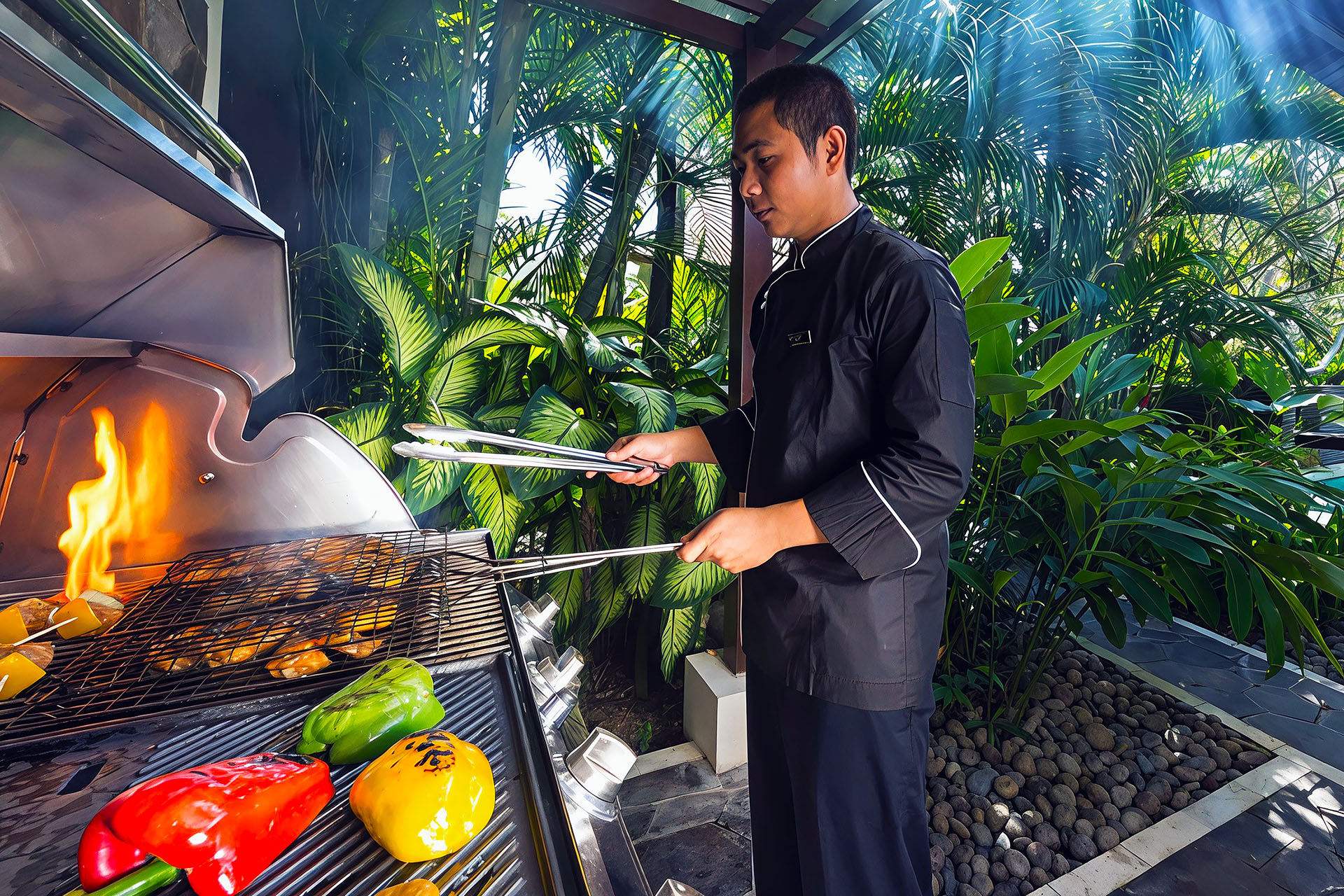
None of these setups is better or worse — they’re just different, and the confusion comes from assuming a villa works one way when it actually works another. If a private chef genuinely matters to your trip (and for many groups, it’s one of the best parts of a villa stay — a dedicated chef preparing meals in your own kitchen, tailored to your group), it’s worth understanding both whether it’s included and, if not, roughly what it costs to add. We’ve written a full breakdown of private chef costs and how the service typically works if that’s relevant to your planning.
What to do about it: ask specifically what’s included at your chosen villa — breakfast, full board, self-catering, or private chef as standard — before you assume any particular arrangement. Don’t wait until you’re hungry on night one to find out the kitchen is beautifully equipped but entirely unstaffed.
5. Airport transfer
This is a genuinely mixed bag across the villa industry, including within our own portfolio: some villas include complimentary airport transfer, and some charge an additional fee for it. There’s no single rule that applies across every property.
Given that Bali’s airport (particularly during peak arrival windows) can be a stressful place to figure out ground transport on the fly, this is exactly the kind of detail worth locking down well before your trip rather than discovering at the arrivals hall. We’ve written a dedicated guide on airport transfer specifically, since it’s one of the most frequently asked questions we get.
What to do about it: ask directly whether airport transfer is included for your specific villa, and if it isn’t, get a clear price for arranging it through us versus independently. Either is fine — the goal is just knowing which situation you’re in before you land.
6. Early check-in & late check-out
Standard check-in is 3pm and check-out is 12pm — a fairly typical window in the villa world. If your flight lands early in the morning or leaves late at night, you may want access to the villa outside that standard window.
Early check-in and late check-out may be available on request, subject to availability — meaning it depends on whether the villa has a gap before your arrival or after your departure, and isn’t something that can always be guaranteed in advance, particularly during busy periods when the villa may be turning over for another guest the same day.
What to do about it: if your flight times mean you’ll land well before 3pm or need to stay past 12pm, ask about this specifically when booking, not the week before your trip. The earlier you flag it, the more likely we can accommodate it — and you’ll know upfront whether any fee applies for the specific villa and dates, rather than being told at 11:45am on checkout day.
7. Babysitting & spa treatments
Beyond the core villa experience, plenty of guests want to add extras during their stay — babysitting for an evening out, in-villa massage or spa treatments, or other bespoke services. These can typically be arranged through your villa manager or our concierge team, but they come at an additional cost, since they involve bringing in outside service providers beyond the villa’s standard staff.
There’s nothing hidden about this in the sense of being deceptive — it’s simply an optional extra, priced separately because it is separate from your base villa rate. The only genuine “gotcha” risk here is assuming these are complimentary because they’re arranged through the villa, when they’re really a paid add-on service.
What to do about it: if you know in advance you’ll want a babysitting evening or an in-villa spa session, ask for pricing when you request it rather than assuming a number — this is one of the more variable cost categories, since it depends on which provider is arranged and for how long.
8. Staff gratuities
This one is a little different from the categories above, because it isn’t a formal LVG charge — it’s a customary practice across Bali’s hospitality industry more broadly, and one that catches first-time villa guests off guard if nobody mentions it.
Villa staff — housekeepers, gardeners, security, and villa managers — often work for relatively modest base wages, and gratuities are a genuinely meaningful part of how many households in the hospitality sector supplement their income, particularly around the villa staff who aren’t necessarily covered by the service charge built into your bill in the same way restaurant or hotel staff might be.
This isn’t a mandatory fee, and there’s no fixed percentage we’ll ask you for — but it’s worth budgeting for as part of your realistic total cost, especially for longer stays with dedicated staff who go out of their way to make your trip smooth. If you’re unsure what’s appropriate for a specific villa’s staffing setup, it’s entirely reasonable to ask your villa manager directly — most are happy to give you an honest, unpressured answer.
9. Security deposit (not a “cost” exactly, but budget for it)
This isn’t technically a hidden cost — it’s disclosed and it’s refundable — but it belongs on this checklist because it’s a real amount of money you need to have available around your stay, and forgetting to plan for it can feel like a surprise even when it isn’t a charge in the traditional sense.
Depending on the specific villa, a security deposit may be collected as cash, a bank transfer, or a credit card authorization hold at check-in, to cover potential damage or loss during your stay. It’s returned after a checkout inspection, assuming there’s nothing to deduct. We’ve written a full explainer on how this works and how it’s different from your booking deposit, since the two are commonly confused.
What to do about it: know before you arrive whether your villa requires a security deposit, roughly how much, and which method it’ll be collected through — so you have the right payment method or available card limit ready on check-in day.
How to get a full, honest price before you book
Here’s the underlying principle behind everything above: none of these costs should be a surprise. Every category on this list is knowable in advance, for your specific villa and your specific plans, if you ask the right questions before you pay a deposit.
When you’re finalizing a booking with us, it’s entirely reasonable — and we’d encourage it — to ask for:
- The all-in total, including government tax and service charge, not just the headline nightly rate
- Whether your guest count and any children trigger extra-guest or bedding charges
- Whether airport transfer is included or chargeable
- What’s included for meals, and the cost of adding a private chef if it isn’t
- Whether events or private parties are allowed, and any associated fee
- Whether a security deposit applies, how much, and how it’s collected
- Any known costs around early check-in or late check-out given your flight times
Ask for this in writing, ideally as part of your booking confirmation, so you have something concrete to refer back to rather than a verbal impression from a chat conversation. A villa rental company that’s genuinely transparent will have no hesitation walking you through all of this before you commit — and if a company is vague or evasive about any of it, that’s worth noticing.
Quick reference: Frequently Asked Questions
Why do villa prices show a “++” symbol? It indicates the listed rate doesn’t yet include government tax and service charge, which are commonly added on top — often in the 10–21% range combined, depending on the property. Always confirm the all-in total before booking.
Are extra guests always charged separately? Not necessarily, but if your group exceeds the villa’s standard occupancy, or you need extra beds or a baby cot, additional charges commonly apply. Confirm your exact guest count when booking.
Is airport transfer included? It depends on the villa — some include it, others charge separately. Always confirm this specifically for your chosen property.
Can I host a party or event at the villa? Some villas allow it with prior approval, and event fees may apply. Always ask before assuming a villa is available for private events.
Are meals included in my stay? It varies — some villas include breakfast or a private chef as standard, others are self-catering with chef service available on request for an extra charge.
Do I need to tip villa staff? It’s not a fixed or mandatory charge, but gratuities are a customary and genuinely appreciated part of villa culture in Bali, given typical staff wages. Budget for it as part of your realistic trip cost.
Is the security deposit a hidden cost? No — it’s disclosed and refundable, but it’s worth planning for as real cash flow around your stay. See our full guide to how security deposits work for the details.
Planning a villa stay and want the full, all-in cost — tax, service charge, and any extras that apply to your group — confirmed before you book? Get in touch with our team with your villa, dates, and guest count, and we’ll give you a complete, honest breakdown before you commit to anything. Ready to start comparing villas? Browse our current collection here.
Related Reads
- Bali Villa Rental Costs & Booking Terms: The Complete Guide
- How Much Does a Luxury Villa in Bali Cost Per Night?
- Hidden Costs of Renting a Villa in Bali: What to Check Before You Book
- Private Chef in Your Bali Villa: How Much Does It Cost?
- Long-Term Villa Stays in Bali: Discounts & What to Know
- Best Time to Book a Villa in Bali: Peak Season Price Guide

Villa vs Hotel in Bali: Which Is Better for Families & Groups?
If you’re planning a Bali trip with family or a group of friends, you’ve probably landed on this exact fork in the road: book a villa, or book a hotel?
Both can absolutely deliver a great trip. This isn’t a “villas are always better” pitch — that wouldn’t be honest, and it wouldn’t actually help you make the right call for your trip. What follows is a genuinely fair, side-by-side comparison, including the situations where a hotel is the smarter choice. If you walk away from this knowing which one fits your specific group, dates, and priorities, we’ve done our job — even if the answer is “book a hotel this time.”
The short version, if you’re skimming: for families and groups of four or more staying several nights or longer, a villa usually wins on space, privacy, and value. For solo travelers, couples, very short stays, or anyone who wants a rotating menu of restaurants and daily-changing amenities without any planning, a hotel usually wins. The size of your group and the length of your stay are the two biggest variables — everything else follows from those.
The honest comparison, side by side
| Villa | Hotel | |
|---|---|---|
| Space | An entire private property — living areas, multiple bedrooms, pool, garden — scaled to your group | A single room (or suite) per couple/family unit, with shared public spaces |
| Privacy | Fully private; no other guests sharing your pool, garden, or common areas | Shared property; pool, restaurants, and lobby used by all hotel guests |
| Cost per person (larger groups) | Often more efficient as group size grows — you’re not paying for a room per two people | Scales roughly linearly — each additional couple/family typically needs another room |
| Kitchen access | Full kitchen in most villas; self-cater freely or bring in a private chef | Limited to none; dining is restaurant-based or room service |
| Staff & service | A dedicated, smaller team (villa manager, housekeeping, sometimes a chef) focused only on your group | Larger professional team, but shared across all guests — front desk, concierge, multiple restaurants |
| Facilities variety | What the specific villa has — pool, sometimes gym or spa on managed estates, but not typically multiple restaurants | Usually multiple dining options, often a spa, gym, kids’ club, and daily activities on-site |
| Best for | Families, groups of 4+, multi-night stays, anyone prioritizing privacy and space | Solo travelers, couples wanting variety, 1–2 night stopovers, anyone who wants zero logistics |
| Flexibility for short stays | Usually needs more lead time to book and settle in; less ideal for a single night | Extremely easy — check in, check out, no planning required |
Now let’s unpack each of these properly, because the table only tells half the story.
Space and privacy: where villas clearly win
This is the least controversial part of the comparison. A hotel room, even a very good one, is still a room — usually somewhere between 30 and 60 square meters, shared with whoever else is in your immediate party, with everything beyond your door being communal space used by every other guest in the building.
A villa is a different category of experience entirely. You get an entire property: multiple bedrooms, a living area, a private pool, often a garden, and the ability to spread your group out during the day without ever needing to negotiate shared space with strangers. For families with young kids who need a nap while others are still up, or a group of friends where some want to sleep in while others are up early for a surf session, that separation is genuinely valuable in a way that’s hard to replicate in a hotel, no matter how nice the room is.
If privacy and personal space are near the top of your priority list — and for most families and groups, they are — this category alone often settles the decision.
Cost per person: where the math actually favors groups
This is where a lot of people assume villas are automatically more expensive, and it’s worth walking through the real logic, because it often works the other way for larger groups.
A hotel’s cost structure is built around the room, and most rooms comfortably sleep two. So a family of six, or a group of eight friends, typically needs three or four hotel rooms — and the total cost scales roughly in a straight line as your group grows. Double the guests, roughly double the rooms, roughly double the bill.
A villa’s cost structure is built around the property, not the headcount. Once you’re paying for the villa, adding another person to your group (up to its stated capacity) doesn’t require booking an entirely new unit — it just means better value spread across more people.
To make this concrete with real numbers: a 4-bedroom villa comfortably sleeping 8 adults starting from around $829++ per night works out to roughly $104 per person, per night, before tax and service — and that’s for an entire private villa with a pool, not a single hotel room. A 5-bedroom villa for 10 adults from around $941++ per night comes out to roughly $94 per person. A 6-bedroom villa for 12 adults from around $1,086++ per night works out to roughly $91 per person — the per-person cost actually drops as the group grows, which is the opposite of how hotel pricing typically behaves.
The honest caveat: these are starting rates, government tax and service charge (the “++”) still apply on top, and actual comparable hotel pricing varies enormously by property tier — a mid-range Bali hotel room might run notably less than these per-person villa figures, while a genuine 5-star luxury resort room can easily run as much or more. So this isn’t a universal “villas are always cheaper” claim. It’s specifically that villa economics improve as your group grows, while hotel economics stay roughly flat per person regardless of group size. For a couple or a solo traveler, that math doesn’t necessarily favor a villa. For a family of six or a group of ten, it very often does.
Kitchen access: a genuine lifestyle difference, not just a cost saver
Most villas come with a full kitchen — not a kitchenette, a real, equipped kitchen — which opens up options a hotel room simply can’t offer regardless of price point. You can self-cater freely, which matters for families with young kids on particular schedules, guests with dietary restrictions who don’t want to navigate a restaurant menu every meal, or anyone who just prefers a relaxed breakfast at home-pace rather than getting the whole group dressed and down to a restaurant each morning.
It also opens the door to bringing in a private chef for some or all of your stay — cooking in your own kitchen, tailored to your group, without ever needing to leave the villa. (We’ve written a full breakdown of what private chef service typically costs if that’s something you’re weighing.)
A hotel, by contrast, means restaurant dining for essentially every meal unless you’re ordering room service — which is a genuinely nice part of a hotel stay for some travelers, and a genuine friction point for others, particularly families juggling young kids’ schedules or larger groups trying to coordinate everyone showing up to breakfast at the same time.
Staff and service: different, not simply “better” or “worse”
This is one of the more nuanced parts of the comparison, and it’s worth being honest about both sides rather than assuming villa service automatically beats hotel service.
A villa typically comes with a smaller, dedicated team — a villa manager, housekeeping staff, sometimes a gardener and security — whose attention, during your stay, is focused entirely on your group rather than split across dozens of other guests. That tends to translate into a more personal, attentive style of service: a villa manager who learns your preferences within a day or two, staff who remember how you like your coffee, a level of familiarity that builds quickly because it’s just your group.
A hotel typically comes with a larger, more structured team — a 24-hour front desk, multiple restaurant staff, a dedicated concierge desk, housekeeping on a fixed schedule — which offers a different kind of reliability. If you need something at 3am, there’s someone at a front desk to ask. If your villa manager is off-shift or it’s the middle of the night, you’re usually contacting an emergency number rather than someone physically on-site.
Neither is objectively superior — they’re different service models suited to different trip styles. If you want deeply personal, familiar service focused entirely on your group, a villa tends to deliver that. If you want the structure and round-the-clock coverage of a larger operation, a hotel tends to deliver that instead.
Where a hotel is genuinely the better choice
In the interest of an honest comparison, here’s where we’d tell a friend to book a hotel instead of a villa:
- Trips centered on resort-style amenities — if the appeal of the trip is a big pool complex, multiple restaurants, a full spa, and daily programming, a resort is genuinely built for that in a way most villas aren’t.
- Solo travelers or couples, where the space and cost-per-person advantages of a villa largely disappear, and hotel amenities (restaurants, bar, pool, spa) offer more built-in variety for one or two people.
- Very short stays — a single night, or a quick stopover between flights — where the logistics of a villa check-in (arrival coordination, villa manager greeting, orientation) add friction that isn’t worth it for a brief stay.
- Travelers who want zero planning — no cooking, no coordinating a group, just checking in and having everything (dining, activities, service) already structured for you.
Where a villa is genuinely the better choice
And here’s where the villa side of the comparison holds up:
- Celebrations or gatherings — reunions, milestone birthdays, multi-generational family trips — where being together in one shared space, rather than scattered across separate hotel rooms, is part of the point.
- Families with kids of different ages or nap schedules, who benefit from private space to spread out during the day.
- Groups of four or more, where the per-person cost math and shared common space both tend to favor a villa.
- Multi-night or multi-week stays, where having a real kitchen, more space, and a private pool meaningfully improves day-to-day comfort over the course of the trip.
- Anyone prioritizing privacy — no shared pool deck, no other guests in your common areas, a genuinely private base to return to each day.
Quick reference: Frequently Asked Questions
Is a villa always cheaper than a hotel in Bali? Not always — it depends on group size and hotel tier. Villa cost-per-person tends to improve as your group grows, while hotel pricing scales roughly per room. For larger groups and longer stays, villas are often more cost-effective; for solo travelers or couples, a well-chosen hotel can be comparable or cheaper.
Is a villa or hotel better for a family with young kids? For most families, a villa’s private space, ability to self-cater, and separation between adult and kid areas make daily life easier — especially for multi-night stays.
What do villas typically lack compared to hotels? The main gap is facility variety — most villas don’t match a large resort’s multiple restaurants, spa menu, gym, and daily programming. If those are a priority, a hotel may suit you better.
Is villa staff service better than hotel service? It’s different, not simply better. Villa service tends to be more personal and focused on your group alone; hotel service offers more structured, round-the-clock coverage across a larger team.
What’s the best option for a one- or two-night stay? A hotel is usually the more practical choice for very short stays, given the lower logistical overhead of checking in and out quickly.
Leaning toward a villa after reading this? Browse our family-friendly and large-group villa collection to see what fits your group size and dates. Still weighing the decision? Get in touch with our team — we’re glad to talk through your specific trip honestly, even if a villa turns out not to be the right fit this time.
Related Reads
- Bali Villa Rental Costs & Booking Terms: The Complete Guide
- What’s Included in a Luxury Villa Stay in Bali?
- Does a Bali Villa Rental Include Airport Transfer?
- Villa vs Hotel in Bali: Which Is Better for Families & Groups?
Private Chef in Your Bali Villa: How Much Does It Cost?
Of all the optional extras you can add to a Bali villa stay, a private chef is consistently one of the most talked-about — and one of the most misunderstood on price. Some guests assume it’s a luxury reserved for the kind of budget most of us don’t have. Others assume it’s basically free because “it’s included in villa life.” Neither is quite right.
This guide lays out realistic cost ranges, how pricing is typically structured, what’s genuinely included versus what costs extra, and — more usefully than just a number — how to think about whether it’s worth adding for your specific group and occasion.
The short version, if you’re skimming:
- Most groups don’t need a chef for every meal — one or two standout evenings (a Balinese feast night, a seafood BBQ) is the sweet spot for most stays.
- Expect a private chef in a Bali villa to run roughly $30–$175 USD (around IDR 500,000–2,500,000) per day, depending on the chef’s level and the menu, with groceries sometimes included and sometimes added separately (commonly around 30% on top if billed separately).
- Some chefs price per meal, per person instead — typically $10–$35 USD (roughly IDR 125,000–500,000) per person, with breakfast and lunch at the lower end and dinner or BBQ menus at the higher end.
- Menu planning, grocery shopping, cooking, plating, and cleanup are standard inclusions. Premium or imported ingredients, wine, and travel surcharges for remote villas are the common extras.
How private chef pricing is actually structured
There isn’t one universal pricing model across Bali — you’ll typically encounter one of two structures, and it’s worth knowing both so a quote makes sense when you see it.
1. A daily or per-service chef fee, plus groceries. The chef charges a flat rate for their time and service that day (covering breakfast, lunch, dinner, or some combination), and groceries are either included in that fee or billed separately — commonly adding around 30% to the total if billed on top.
2. A per-person, per-meal rate, plus a separate chef hire fee. Here, you’re quoted a price per guest for the menu itself (which includes the ingredients), plus a smaller standalone fee for the chef’s time that day — often lower for breakfast and lunch service, higher for dinner or a BBQ-style menu given the extra prep and service involved.
Neither structure is “the right one” — different chefs and villa concierge services use different models. What matters is that whoever quotes you is clear about which structure applies, so you’re comparing like for like rather than assuming a daily rate and a per-person rate mean the same thing.
Realistic cost ranges by tier
To give you something more useful than a single number, here’s roughly how the market breaks down by service level:
| Tier | Typical daily rate | What it typically gets you |
|---|---|---|
| Budget / casual | ~$35–$70 (IDR 500,000–1,000,000) | Simple, fresh local dishes — grilled fish, tropical fruit, everyday Balinese and Western staples. Comfortable for 2–4 guests. |
| Mid-range | ~$70–$125 (IDR 1,000,000–1,800,000) | A step up in polish — Balinese specialties alongside Western dishes, more menu variety. Comfortable for 4–8 guests. |
| Luxury / fine dining | ~$140–$175+ (IDR 2,000,000–2,500,000+) | Multi-course tasting menus, premium and sometimes imported ingredients, wine pairings, and a more formal table-service style. Suited to celebrations or special occasions. |
If you’re being quoted per person instead of a flat daily rate, breakfast and lunch menus commonly fall in the $10–$20 (IDR 125,000–300,000) per person range, while dinner and BBQ/seafood menus tend to run $15–$35 (IDR 230,000–500,000) per person — reflecting the extra prep, ingredients, and service involved in an evening meal.
A useful sanity check when comparing quotes: work out the total cost for your group and meal count, not just the headline number. A $70 daily rate for a chef cooking dinner for ten people is a very different value proposition than the same $70 rate for a couple — divide the realistic total by your group size to see the true per-person cost before deciding.
What’s typically included
A properly quoted private chef service should cover:
- Menu planning — usually a conversation beforehand about your group’s preferences, dietary restrictions, and any dishes you’re hoping to try
- Market shopping — the chef (or their team) sourcing fresh ingredients, often same-day for the best quality
- Cooking and plating in your villa’s kitchen
- Table service for the meal itself, in many packages
- Cleanup afterward — pots, pans, and kitchen reset, so you’re not left with dishes after a special evening
This is genuinely the value proposition beyond just “someone else cooks”: you get a fully handled evening, from planning through cleanup, without leaving your villa.
What typically costs extra
To keep this genuinely useful rather than vague, here’s what tends to sit outside the base price:
- Premium or specialty ingredients — think wagyu beef, fresh lobster, imported cheeses, or specific wines requested beyond the standard menu. These are usually quoted separately once you’ve chosen them.
- Wine and alcohol pairings, if not already built into a set package — most chef services handle food, with beverages as a distinct add-on.
- Travel surcharges for remote villas — chefs based centrally in areas like Seminyak or Canggu may add a small travel fee for villas further out (deep Ubud, West Bali, or similarly distant locations).
- Larger, more elaborate menus than initially discussed — if you add courses, guests, or complexity after the initial quote, expect the price to adjust accordingly.
None of this should come as a surprise if you’re working with a clear, upfront quote — which is exactly why it’s worth asking for a full written breakdown before the evening, not just a headline “per day” number.
Is it worth it? A decision framework by group size and occasion
Rather than treating this as a flat yes/no, here’s how to think about it for your specific trip:
Couples or very small groups (2–4 guests): A private chef dinner is a genuine splurge-but-affordable option — often comparable to, or only modestly more than, a nice restaurant dinner out, but with the villa setting, full menu customization, and zero logistics of getting dressed and finding a table. Worth it for a special evening (anniversary, honeymoon night) even if you’re not doing it every night of the trip.
Families (with kids of varying ages): A budget-to-mid-tier chef for breakfast or a simple dinner can genuinely simplify a trip with young children — no restaurant wrangling, meals on your own schedule, and menus that can be adapted for picky eaters far more easily than a restaurant kitchen would accommodate.
Larger groups (8+ guests): This is where a chef often makes the most practical sense. Coordinating a restaurant reservation for ten or more people, every night, gets genuinely tiring — and the per-person cost of an in-villa chef for a group this size is frequently comparable to, or cheaper than, a group restaurant outing, without the hassle of transport and reservations.
Celebrations and special occasions: Milestone birthdays, anniversaries, family reunions — this is where the luxury tier genuinely earns its price. A multi-course tasting menu with wine pairings, served in your own villa, tends to be the standout memory of a trip for exactly the kind of occasion worth splurging on.
One honest note on frequency: most guests don’t need — or even want — a chef for every single meal of their stay. Part of the appeal of Bali is its restaurant scene, beach clubs, and warungs, and booking a chef for all three meals every day can mean missing out on that. The combination that tends to get the best reviews from guests is one standout evening (a Balinese feast night or a fresh seafood BBQ by the pool) rather than full-time chef service for the whole trip — though of course, if a fully catered stay is exactly what you want, that’s entirely reasonable too.
How to get an accurate quote for your stay
Because pricing depends so much on group size, menu choice, and your specific villa’s location, the only way to get a genuinely accurate number is to ask directly rather than rely on a general range. When you reach out, it helps to have ready:
- Your group size and any dietary restrictions or allergies
- Your villa and its general location (central vs. more remote areas)
- Which meals you’re interested in (a single dinner, a full day, or multiple days)
- Any occasion worth mentioning (birthday, anniversary, reunion) — chefs often tailor a menu around it
With that information, our concierge team can arrange a chef and menu suited to your group, with a clear, written quote before you commit — no guessing required.
Quick reference: Frequently Asked Questions
How much does a private chef cost per day in a Bali villa? Typically $30–$175 USD (roughly IDR 500,000–2,500,000), depending on the chef’s tier and menu complexity, with groceries either included or added separately (often around 30% on top).
How much does a private chef cost per meal, per person? Roughly $10–$35 USD (IDR 125,000–500,000) per person, with breakfast and lunch at the lower end and dinner or BBQ menus at the higher end.
Are groceries included in the price? It depends on the package — some quotes bundle groceries into the daily rate, others bill them separately (commonly adding around 30%). Always confirm which applies to your quote.
What’s typically included in the service? Menu planning, market shopping, cooking, plating, and cleanup. Table service is often included as well, depending on the package.
What costs extra? Premium or imported ingredients, wine and alcohol pairings, travel surcharges for remote villas, and any menu changes beyond your original request.
Do I need a chef for every meal of my stay? Not necessarily — most guests get the best value from one or two standout meals (a feast night or seafood BBQ) rather than full-time chef service, though a fully catered stay is available if that’s what you’d prefer.
Is a private chef worth it for a large group? Often, yes — the per-person cost for a group of eight or more can be comparable to or cheaper than a restaurant outing, without the logistics of transport and reservations.
Ready to add a private chef to your stay? Get in touch with our team with your villa, group size, and preferred meals, and we’ll arrange a chef and a clear, written quote before you commit to anything. Still choosing your villa? Browse our current collection here — our concierge team can help you plan the full stay, chef included.
Related Reads
- Bali Villa Rental Costs & Booking Terms: The Complete Guide
- How Much Does a Luxury Villa in Bali Cost Per Night? 2026 Price Guide
- Hidden Costs of Renting a Villa in Bali: What to Check Before You Book
- Private Chef in Your Bali Villa: How Much Does It Cost?
- Long-Term Villa Stays in Bali: Discounts & What to Know
- Best Time to Book a Villa in Bali: Peak Season Price Guide

Long-Term Villa Stays in Bali: Discounts & What to Know
If you’re planning to spend a few weeks — or a few months — working remotely from Bali, you’ve probably noticed that most “digital nomad villa” content online is talking about a completely different product than what we offer. Most of it points toward basic monthly apartment or villa rentals in the $500–$1,000/month range: simple, unfurnished-to-lightly-furnished spaces without daily staff, without a private pool maintained for you, without concierge service.
That’s a legitimate way to live in Bali long-term, and plenty of people do it well. But it’s not what we’re talking about in this guide. LVG’s long-stay product is a genuinely luxury villa — full staff, private pool, daily housekeeping, concierge service — booked for an extended period at a discounted rate off the standard nightly price, not a budget monthly lease. If you’re comparing our long-stay pricing to a $600/month Canggu studio, you’re comparing two different markets, and it’s worth knowing that upfront so you can budget accurately for the actual product you’re considering.
With that framing in mind, here’s exactly how long-stay discounts work, what’s genuinely negotiable, what stays fixed regardless of how long you book, and how to build a realistic monthly budget for a luxury villa stay.
The short version, if you’re skimming:
- Long-stay discounts off the standard nightly rate are common across the villa industry for bookings of 7+, 28+, and 60+ nights, with the discount typically growing alongside the length of stay.
- Government tax and service charge, staff service, and utility usage (especially air conditioning) don’t shrink proportionally with a discount — they’re largely tied to how the villa actually operates day to day, not just the headline rate.
- The exact discount percentage for a specific villa and length of stay is confirmed directly with our team — we don’t publish one fixed universal number, because it depends on the villa, season, and your dates.
- A realistic all-in monthly budget for a staffed luxury villa runs meaningfully higher than a basic monthly rental — this guide will help you calculate a real number for a villa you’re considering.
How long-stay pricing typically works
Across the villa rental industry generally — including many properties in our own portfolio — longer bookings commonly unlock a reduced nightly rate compared to the standard short-stay price. The logic is straightforward from the owner’s side: a guest booked for a month represents guaranteed, predictable occupancy and lower turnover costs (less cleaning between different groups, less admin, more certainty in the calendar) compared to a string of separate short bookings. That efficiency is often passed on, at least partly, as a lower effective nightly rate for longer stays.
The general shape you’ll typically see:
- Weekly stays (7+ nights): a modest discount off the standard nightly rate, often in a small single-digit-to-low-teens percentage range.
- Monthly stays (28+ nights): a more meaningful discount, commonly landing somewhere in the range many extended-stay guests report seeing across the industry — often somewhere in the 15–30% range off the standard nightly rate, though this varies significantly by villa, owner, and season.
- Extended stays (60–90+ nights): the largest discounts tend to apply here, since this represents the strongest commitment and the most predictable, lowest-turnover booking for the villa.
Why we’re not printing one universal percentage: because it genuinely isn’t universal. Discount depth depends on the specific villa, whether you’re booking during peak or low season, how far in advance you’re booking, and whether the villa owner has other demand for those same dates. A villa that’s typically in high demand during your target months may offer a smaller discount than one that would otherwise sit empty. The only way to get an accurate number is to ask directly for your specific villa and dates — which, unlike a vague “contact us for rates” brush-off, is something our team will confirm clearly and promptly.
A realistic budget example
Numbers are more useful than percentages in the abstract, so let’s walk through one.
Take a villa listed at a standard rate of roughly $829++ per night (a real example from our current portfolio — a 4-bedroom villa comfortably sleeping 8 adults). At the full nightly rate with no discount, a 30-night stay would run:
$829 × 30 = $24,870, before government tax and service charge (commonly adding roughly 10–21% depending on the property, per our guide on hidden costs) — pushing the pre-discount total meaningfully higher.
Now apply an illustrative long-stay discount — say, 25% off the nightly rate, which sits within the range many guests report seeing for month-long bookings industry-wide (again, not a guaranteed figure for this specific villa):
$829 × 0.75 = ~$622 effective nightly rate, bringing the 30-night total to roughly $18,660, still before tax and service charge.
That’s the shape of the calculation to run for any villa you’re considering: take the standard nightly rate, apply a realistic discount range once you’ve confirmed it with our team, multiply by your intended length of stay, and then add tax and service on top. It’s a genuinely different number than a $700/month apartment — because it’s a genuinely different product: a full villa with daily housekeeping and a private pool, not a single room.
What’s actually negotiable
Being direct about this, since it’s the useful part: a few things are realistically open for discussion when you’re booking an extended stay, particularly the longer and more flexible you can be.
Payment structure. For very long stays, some owners are open to a different payment schedule than the standard deposit-plus-75-day-final-payment structure used for shorter bookings — this is worth raising directly if it matters to your cash flow.
The nightly rate itself, via the long-stay discount structure described above — this is the primary lever, and it’s worth asking clearly what applies to your specific dates.
Date flexibility. If you can shift your start or end date by a few days to fit a gap in the villa’s calendar, owners are sometimes willing to sharpen the rate further, since it helps them minimize any empty nights around your stay.
Bundled add-ons. For longer stays, it’s sometimes possible to negotiate elements like a periodic (rather than daily) private chef service, or adjusted terms on services like laundry, as part of a broader long-stay package — worth asking about specifically rather than assuming it’s off the table.
What stays fixed, regardless of length of stay
Equally important — and often overlooked in a “just negotiate everything” mindset — are the costs that don’t meaningfully shrink just because you’re staying longer:
- Security deposit. If your villa requires one, it typically applies at check-in regardless of stay length, and is refunded on the same basis as any other stay.
- Government tax and service charge. This is a percentage-based charge tied to the rate you’re actually paying, not a flat fee that gets diluted over a longer stay. It applies at the same rate whether you’re booking three nights or three months.
- Staff service. The villa’s team — housekeeping, gardening, security, villa management — works the same daily schedule regardless of your length of stay. A longer booking doesn’t reduce their workload proportionally, so service charge and any staff gratuities you choose to budget for remain a real, ongoing cost throughout your stay, not just at the start.
- Utility usage — especially air conditioning. This is genuinely the most underestimated cost category for long-stay guests, and worth its own explanation below.
Utilities: the cost that catches long-stay guests off guard
Short-stay guests rarely think much about utility costs, since a few nights of air conditioning barely registers against the total bill. Over several weeks or months, it’s a different story.
Bali’s tropical climate means air conditioning is often running for extended hours daily — in bedrooms overnight, in living spaces during the day if you’re working from the villa — and electricity costs in Indonesia are genuinely tied to actual consumption, not a flat fee that disappears into a discounted rate. Whether utilities are included in your rate, capped at a certain usage level, or billed separately based on metered consumption varies by villa, and it’s one of the most important things to clarify specifically for a long stay, since the difference between “all-inclusive” and “billed on top” can meaningfully affect your monthly total.
What to ask before booking a long stay: whether electricity, water, and WiFi are included in the quoted long-stay rate, whether there’s a usage cap beyond which you’re billed separately, and — if metered — what a realistic monthly utility cost has looked like for previous long-stay guests at that specific villa. This is exactly the kind of detail worth nailing down in writing before you commit to a month or more.
Practical considerations specific to remote work
If you’re planning to actually work from the villa during your stay, a few extra questions are worth adding to your enquiry beyond just the rate:
- Visa and stay-duration requirements. Indonesian visa and stay regulations for extended visits change periodically and depend on your nationality and the length of your intended stay, so this isn’t something we can advise on generally — please confirm current requirements directly with official Indonesian immigration sources or a qualified visa service well before booking a long stay, so your travel plans and your villa booking line up correctly.
- Internet speed and reliability. Ask specifically about the connection speed and whether the villa has backup options (a secondary provider, a mobile hotspot) for the inevitable occasional outage — not all villas are equally set up for serious remote work.
- Workspace setup. A dedicated desk, reliable power outlets, and good natural light matter more over weeks of daily work than they do for a typical holiday stay — worth asking about specifically if it’s not obvious from listing photos.
How to get the best long-stay rate
A few practical habits that tend to help, based on how these bookings typically play out:
- Book with reasonable lead time, particularly if you’re targeting a popular villa or a period with strong demand (mid-year and December–January tend to be busiest) — long-stay availability at the best villas can fill up further in advance than you’d expect.
- Reach out with your real intended dates and length of stay upfront, rather than asking for “a general long-stay rate” — a specific villa, specific dates, and a specific duration is what allows us to give you a real, confirmed number rather than a vague range.
- Be flexible where you can be. A few days of flexibility on your start date can sometimes unlock a meaningfully better rate if it helps fill a gap in the villa’s calendar.
- Ask every question in this guide directly — utilities, what’s included, payment structure — and get the answers in writing before you commit. A month-long booking is a big enough commitment that a written confirmation genuinely matters.
Quick reference: Frequently Asked Questions
Is LVG’s long-stay product the same as a budget monthly rental? No. LVG offers fully staffed luxury villas at a discounted nightly rate for extended stays — a different, higher-tier product than basic monthly apartment or villa rentals commonly advertised for digital nomads.
How much of a discount can I expect for a month-long stay? It varies by villa, season, and dates, but many guests see discounts broadly in the 15–30% range off the standard nightly rate for month-long bookings, with larger discounts sometimes available for 60+ night stays. Confirm the exact figure for your specific villa and dates directly with our team.
Are utilities included in the long-stay rate? It depends on the villa — some include utilities up to a reasonable usage level, others bill separately based on metered consumption, particularly for air conditioning. Always confirm this specifically before booking.
Is the discount negotiable further? The nightly rate itself has the most room for discussion, particularly with date flexibility. Government tax, service charge, and staff service costs are generally fixed regardless of stay length.
What should remote workers ask about before booking? Internet speed and reliability, backup connectivity options, and workspace setup, in addition to the standard pricing and utility questions covered above.
Do I need a visa for an extended stay? Visa requirements depend on your nationality and intended length of stay, and current regulations should be confirmed directly with official Indonesian immigration sources or a visa specialist — we’re not able to advise on this directly.
Considering a month or longer in Bali? Get in touch with our team with your target villa, dates, and length of stay, and we’ll confirm a real, written long-stay quote — including what’s included and what isn’t — before you commit. Want to see which villas suit an extended stay best? Browse our current collection here.
Related Reads
- Bali Villa Rental Costs & Booking Terms: The Complete Guide
- How Much Does a Luxury Villa in Bali Cost Per Night? 2026 Price Guide
- Hidden Costs of Renting a Villa in Bali: What to Check Before You Book
- Private Chef in Your Bali Villa: How Much Does It Cost?
- Long-Term Villa Stays in Bali: Discounts & What to Know
- Best Time to Book a Villa in Bali: Peak Season Price Guide

Best Time to Book a Villa in Bali: Peak Season Price Guide
Two travelers can book the exact same villa, for the exact same length of stay, and pay wildly different amounts — sometimes double — depending purely on when their dates fall on the calendar. If you have any flexibility at all in your travel dates, understanding Bali’s seasonal pricing pattern is one of the highest-value pieces of planning you can do before you book.
This guide walks through Bali’s real seasonal structure — not just “peak vs. off-peak,” but the specific windows, how much prices genuinely move between them, how far in advance to book depending on when you’re traveling, and where to find the best current rates once you know your dates.
The short version, if you’re skimming:
- The two true peak windows are July–August and late December through early January (Christmas/New Year). Prices during these windows commonly run somewhere in the range of 20–60% higher than the annual average, depending on the specific villa, location, and how far out you book — wide-ranging market data converges on that as a realistic band, though individual properties vary.
- Easter and Chinese New Year are secondary high-demand windows — busier and pricier than average, but generally not as extreme as the two true peaks.
- The best value windows are typically January–March (excluding the New Year rush) and October–November, with May–June and September often cited as the genuine “sweet spot” — good weather, thinner crowds, and reasonable rates.
- Book 6–12 months ahead for the two true peak windows; 4–6 months ahead is usually enough for shoulder seasons.
- Minimum-stay requirements (often 5–7 nights) are common during Christmas/New Year and other peak weeks — factor this into your planning if you’re hoping for a short trip during those dates.
Bali’s real seasonal structure
Most “best time to visit Bali” content oversimplifies this into a binary — peak season versus everything else. In reality, there’s a more useful three-part structure worth understanding, because it changes how you should think about both weather and price.
True peak season: July–August and Christmas/New Year (mid-December to early January). These are the two windows where demand and pricing both hit their genuine ceiling. July–August lines up with the Southern Hemisphere winter and Northern Hemisphere summer school holidays — a huge portion of Bali’s peak traffic comes from Australian families and European summer travelers, converging with Bali’s driest, most reliably sunny stretch of weather. Christmas–New Year is a different kind of peak: it falls during Bali’s wetter season, so the demand isn’t weather-driven the way July–August is — it’s purely holiday-driven, as families and groups from around the world time trips around the calendar rather than the climate.
High season / shoulder peaks: Easter, Chinese New Year, and September. These windows see meaningfully more demand than a quiet month, particularly from regional markets (Australia, Singapore, other parts of Asia), but they don’t typically reach the same fever pitch as the two true peaks. Prices rise, but usually more moderately.
Low season / best value: January–March (excluding the New Year rush) and October–November, with May–June often singled out as the genuine sweet spot — dry-season weather without peak-season pricing or crowds, since it sits just before the July surge properly kicks in.
Understanding which category your target dates fall into is the single most useful filter for planning both your budget and your booking timeline.
July–August: the dry-season peak
This is Bali’s most reliable stretch of good weather — low humidity, consistent sunshine, dependable beach and surf conditions — which is exactly why it draws such heavy demand. The window widens somewhat at the edges too: parts of June and early July can start to behave like peak season if school holidays land early, and demand often stays elevated into the first week or two of September in some years.
What this means for pricing: expect villa rates across Bali — but especially in high-demand areas like Seminyak, Canggu, and the Bukit Peninsula (Uluwatu) — to sit meaningfully above their annual average throughout this window, with the tightest, most expensive stretch usually falling in late July through mid-August when Australian and European school holidays overlap most heavily.
What this means for availability: the best villas in popular areas can book out well in advance for this window specifically, which sometimes matters more than the price itself — a villa that’s simply unavailable is a bigger problem than one that costs more.
Christmas–New Year: the holiday peak
This is a genuinely different kind of peak season from July–August, and worth understanding on its own terms. It falls during Bali’s wetter months, so unlike the dry-season surge, this peak isn’t about chasing good weather — it’s driven entirely by the holiday calendar, as families and groups from around the world time trips to coincide with Christmas and New Year regardless of the forecast.
A few practical realities specific to this window:
- Minimum-stay requirements are common — many villas require bookings of 5–7 nights or more across the festive period, so a short “just the 30th through the 2nd” plan often isn’t available; you may need to extend your dates to align with what villas are actually offering.
- This is frequently the single most expensive window of the year, sometimes exceeding even the July–August peak, particularly for the specific nights spanning Christmas Day and New Year’s Eve.
- It’s also, for many families, the only window where a full multi-generational group can travel together — which is exactly why demand stays so strong despite the price and the rain risk. If you’re weighing a multi-household or multi-generational trip specifically for this window, it’s worth reading further on how larger festive groups are typically accommodated (multiple neighboring villas booked together, rather than squeezing everyone into one property) so you can plan the right villa configuration rather than just the right dates.
If your travel dates are flexible at all and Christmas–New Year isn’t a specific requirement for your group, this is the single highest-leverage window to avoid if budget matters more than hitting that exact calendar slot.
Easter and Chinese New Year: the secondary peaks
These windows deserve their own mention because they genuinely do drive up demand and pricing — just not usually to the same extreme as the two true peaks above.
Easter draws strong demand, particularly from regional markets with school holidays timed around it, and villa rates typically rise above baseline for the surrounding week or two. Chinese New Year similarly drives a concentrated spike in demand from across Asia, particularly for a shorter, more specific window tied to the lunar calendar (meaning the exact dates shift year to year — worth checking the current year’s dates specifically rather than assuming a fixed calendar slot).
September also tends to see steadier-than-average demand, sitting in something of a secondary-peak position — good weather without the full intensity of the July–August crush.
If your dates land in one of these windows, expect a genuine step up from low-season pricing, but generally with more room to find good value and availability than during the two true peaks.
The best value windows
January through March (excluding the New Year rush) and October through November are consistently identified as Bali’s lower-demand, better-value stretches. Rainfall and humidity are typically higher during parts of this window (particularly January–March), which is part of why pricing eases — but for travelers who don’t mind the occasional tropical downpour (which in Bali is often a dramatic but short-lived afternoon event rather than an all-day washout), this period offers real value: more room to negotiate, more availability at top villas, and meaningfully lower rates.
May–June and September are frequently cited as the genuine sweet spot — dry-season-quality weather without peak-season pricing, since May–June sits just ahead of the July surge and September sits just after the heaviest of it. If your dates are flexible and good weather matters to you as much as good pricing, these windows are worth prioritizing over the shoulder months on either side.
How much do prices actually move?
This is the part most guides are frustratingly vague about, so let’s be as concrete as the available data allows — while being honest that the exact figure for any specific villa will vary.
Looking across a range of current Bali villa and hospitality market data, peak-season price increases most commonly cluster in the 20–60% range above the annual average or low-season baseline, with some sources citing figures at the lower end of that range (around 20–30%) and others — particularly for the most in-demand villas in the most sought-after locations during the tightest peak weeks — citing figures toward the higher end (45–60% or more). A villa that rents for a given rate during a quiet month in February might reasonably command anywhere from a modest premium to well over 50% more during the tightest week of the July–August or Christmas peak.
Why the range is wide rather than a single number: it depends heavily on the specific villa’s location, size, and typical demand pattern, plus exactly which week within the peak window you’re looking at (the days spanning Christmas and New Year’s Eve themselves are typically the single most expensive nights of the entire year, more so than the weeks surrounding them). Rather than treating any published percentage as gospel for your specific villa, use it as a planning signal — expect a meaningful jump for true peak dates, budget accordingly, and confirm the actual rate for your specific villa and dates directly, since that’s the only number that will actually apply to your booking.
A practical “book by” timeline
Given how much availability (not just price) tightens during peak windows, timing your actual booking matters almost as much as choosing your travel dates. Here’s a realistic guide:
| If you’re traveling during… | Aim to book by… |
|---|---|
| Christmas–New Year (mid-Dec–early Jan) | 6–12 months ahead — the most in-demand villas and configurations (especially multi-villa compounds for larger groups) can sell out this far in advance for these specific dates |
| July–August peak | 6–12 months ahead, especially for popular areas like Seminyak, Canggu, and Uluwatu |
| Easter or Chinese New Year | 4–6 months ahead is usually sufficient, though popular villas can still book out closer to the date |
| September (secondary peak) | 4–6 months ahead for the best selection |
| May–June or shoulder months | 3–4 months ahead is typically comfortable, though earlier is never a disadvantage if you have a specific villa in mind |
| January–March or October–November (low season) | 1–3 months ahead is often enough, and genuine last-minute deals can appear even closer to your travel dates if your schedule is flexible |
One caveat worth flagging honestly: these are general guidelines based on typical demand patterns, not guarantees. A particularly popular or unique villa (a rare beachfront property, a large estate suited to weddings) can book out far earlier than this table suggests, regardless of season. If you have a specific villa in mind rather than just a general date range, it’s worth reaching out early regardless of how far the season itself would normally require.
Weighing weather against price: a practical framework
Since price and weather move somewhat independently of each other (Christmas–New Year is expensive and rainy; May–June is affordable-ish and dry), it’s worth thinking through your own priorities rather than assuming “peak season” automatically means “best weather.”
- If your dates are fixed around a holiday (Christmas, a specific school break) regardless of price: budget accordingly and book early — fighting the calendar on price is generally a losing battle, but booking early at least protects your access to the villa and configuration you actually want.
- If good weather is your top priority and budget is flexible: July–August delivers the most reliable dry-season conditions, but expect to pay peak rates and book well ahead.
- If value is your top priority and you can tolerate some rain risk: January–March or October–November will save you the most, with the understanding that afternoon showers are a realistic (though usually brief) part of the deal.
- If you want the best balance of both: May–June or September tend to deliver strong weather without the full peak-season price tag — genuinely the highest-value windows for most travelers without a fixed date requirement.
Where to find the best current rates
Everything above is about the general seasonal pattern — genuinely useful for planning, but not a substitute for real, current pricing. Villa rates, availability, and promotional offers shift throughout the year based on actual demand, not just the calendar, which is exactly why we keep an up-to-date Promotions page showing current deals across our portfolio rather than relying on guests to guess at seasonal math on their own.
If you’re weighing multiple possible date ranges — say, choosing between a pricier July trip and a more affordable September one — it’s worth checking current promotions for both before deciding, since actual live pricing (including any active low-season or shoulder-season offers) will always be more accurate than a general seasonal estimate. It’s also worth asking our team directly if you’re flexible on dates; sometimes shifting a trip by even a week or two can meaningfully change the rate available for a specific villa.
Quick reference: Frequently Asked Questions
What are the true peak season dates in Bali? July–August and mid-December through early January (Christmas–New Year) are Bali’s two genuine peak windows, with the highest demand and pricing of the year.
How much more expensive is peak season? Commonly somewhere in the 20–60% range above the annual average or low-season baseline, depending on the villa, location, and specific dates — with Christmas–New Year and the tightest weeks of July–August often at the higher end of that range.
Is Easter considered peak season? It’s a secondary high-demand window — busier and pricier than average, but generally not as extreme as July–August or Christmas–New Year.
When is the cheapest time to book a villa in Bali? January–March (excluding the New Year rush) and October–November tend to offer the best value, with some rainfall risk. May–June and September often deliver a strong balance of good weather and reasonable pricing.
How far ahead should I book for peak season? 6–12 months ahead for July–August or Christmas–New Year is a safe guideline, particularly for popular villas and locations. 4–6 months is usually sufficient for shoulder seasons.
Do villas require a minimum stay during peak season? Many do, particularly across Christmas–New Year, where 5–7 night minimums are common. Always check minimum-stay requirements for your specific villa and dates.
Where can I find current deals? Our Promotions page reflects live, current pricing and offers across our portfolio — always a more accurate guide than general seasonal estimates alone.
Weighing your travel dates against your budget? Check our current Promotions page for live deals, or get in touch with our team if you have some flexibility on dates — we’re glad to help you find the window that best balances weather, price, and availability for your trip.
Related Reads
- Bali Villa Rental Costs & Booking Terms: The Complete Guide
- How Much Does a Luxury Villa in Bali Cost Per Night?
- Hidden Costs of Renting a Villa in Bali: What to Check Before You Book
- Private Chef in Your Bali Villa: How Much Does It Cost?
- Long-Term Villa Stays in Bali: Discounts & What to Know
- Best Time to Book a Villa in Bali: Peak Season Price Guide

Does a Bali Villa Rental Include Airport Transfer?
Short answer: it depends on the villa — some include complimentary airport transfer, others don’t, and there’s no single rule across the industry. When it’s not included, a private transfer typically costs somewhere between $15 and $40 USD for a standard car (more for larger vehicles or longer distances), and it’s easy to arrange either way once you know which situation applies to your booking.
Here’s the fuller picture, so you can plan your arrival with confidence rather than guesswork.
Why airport transfer isn’t a universal inclusion
It would be simpler if every villa handled this the same way, but the honest answer is that it varies — and understanding why helps make sense of it rather than treating it as an inconsistency to be frustrated by.
Some villas, particularly those in fully managed collections, build a complimentary airport transfer into the rate as a standard part of the guest experience — it’s baked into the pricing and the operational routine for every arrival. Others, especially independently owned properties or villas priced more competitively on the nightly rate, treat transfer as a separate, optional service — available to arrange, but billed apart from the room rate itself.
Neither approach is inherently better. A villa with transfer included may reflect that cost in a slightly higher nightly rate; a villa without it may offer a more competitive base rate with transfer priced separately. What matters isn’t which model a given villa uses — it’s knowing which one applies to your booking before you land.
How to check for your specific villa
This is genuinely simple to resolve, and worth doing well before your trip rather than assuming either way:
- If you’re comparing multiple villas, factor this into your comparison. A villa with transfer included and a villa without it aren’t perfectly comparable on nightly rate alone — the true cost of your stay includes whichever applies.
- Check your villa’s listing details or ask when you enquire. Whether airport transfer is included is typically noted in the villa’s amenities or can be confirmed directly by our team.
- Ask specifically, not generally. “Does this villa include airport transfer” is a more useful question than a general “do your villas include transfer,” since the answer genuinely differs property to property.
- Get it confirmed in writing as part of your booking confirmation, so you have something concrete to reference — not a vague recollection of a conversation — when you’re organizing your arrival plans.
Typical costs when transfer isn’t included
If your chosen villa doesn’t include complimentary transfer, here’s a realistic sense of what to budget, based on current typical private transfer pricing across Bali:
| Destination area | Standard private car (1–4 passengers) | Larger vehicle (5+ passengers) |
|---|---|---|
| Kuta / Legian / Tuban | ~$15–20 | ~$30–45 |
| Seminyak / Nusa Dua / Sanur | ~$15–25 | ~$35–50 |
| Canggu | ~$20–35 | ~$40–65 |
| Uluwatu / Bukit Peninsula | ~$20–35 | ~$40–65 |
| Ubud | ~$28–35 | ~$50–90 |
A few notes on these numbers: they’re one-way, per-vehicle rates (not per person) for a private, pre-booked transfer — genuinely the most sensible option for villa guests over hailing a ride at the arrivals hall, for reasons covered below. Prices vary somewhat by operator and can shift with demand during peak travel periods, so treat this table as a realistic planning range rather than a fixed quote. If you’re traveling with a larger group or significant luggage, factor in a larger vehicle (a minivan or minibus) rather than assuming a standard car will comfortably fit everyone and everything.ew Year isn’t a specific requirement for your group, this is the single highest-leverage window to avoid if budget matters more than hitting that exact calendar slot.
What a private transfer typically includes
When you arrange a private airport transfer — whether through us or independently — a proper service typically includes:
- A driver waiting at arrivals holding a name board, so you’re not searching for transport in an unfamiliar terminal
- Flight tracking, meaning the driver adjusts for delays rather than giving up if your flight lands late
- Assistance with luggage from the terminal to the vehicle
- A fixed, pre-confirmed price — no meter, no negotiation, no surprises at the other end
- Direct, door-to-door service to your specific villa, including navigating the narrow, sometimes unmarked lanes that many Bali villas — particularly in Canggu and parts of Uluwatu — are accessed through, which an unfamiliar driver can genuinely struggle with
This last point matters more than it might seem. Plenty of villas, especially in Canggu and the Bukit Peninsula, sit down lanes that aren’t well signposted, and a driver who already knows the route makes a real difference after a long flight, particularly late at night.
If it’s not included: your realistic options
If your villa doesn’t include complimentary transfer, you generally have a few paths:
Arrange it through us. This is usually the simplest option — we can confirm a private transfer for your flight details, priced clearly upfront, coordinated directly with your villa arrival.
Book an independent private transfer service. Plenty of reputable operators offer fixed-price, pre-booked transfers with meet-and-greet service, generally in a similar price range to the table above.
Use the official airport taxi counter. Ngurah Rai Airport has an official taxi service with posted rates, which is a reasonable fallback, though typically without the meet-and-greet, flight tracking, or fixed advance pricing of a pre-booked private transfer.
One important note if you’re considering ride-hailing apps: Grab and Gojek are not permitted to pick up passengers directly at Ngurah Rai Airport — a restriction worth knowing about in advance, since travelers unfamiliar with this sometimes plan around an option that isn’t actually available at the terminal. If cost is a major factor, some travelers walk a short distance outside the airport perimeter to request a ride-hailing pickup, but this isn’t something we’d recommend after a long-haul flight with luggage, particularly at night or for families — a pre-booked private transfer is the more reliable and genuinely comparable-cost option for most villa guests.
Practical tips for a smooth arrival
A few things worth arranging in advance regardless of which option you choose:
- Build in a little buffer for delays. Bali’s roads, particularly around the airport and into areas like Seminyak or Canggu during peak arrival hours (often evening, when many long-haul flights land), can be genuinely slow. A pre-booked private transfer with flight tracking handles this far more gracefully than trying to arrange something reactively after landing.
- Share your flight number, not just an arrival time. This allows a driver (private or through us) to track your actual landing time and adjust for delays, rather than working from a scheduled time that may no longer be accurate.
- Confirm luggage capacity for your group. A standard car comfortably fits 2–4 passengers with normal luggage; larger groups or extra baggage (surfboards, sports equipment, additional bags) usually need a larger vehicle arranged in advance rather than discovered as a problem at the curb.
- Ask about child seats if traveling with young children. Not all transfer services provide these standard — worth confirming specifically if it matters for your family.
Quick reference: Frequently Asked Questions
Does every LVG villa include airport transfer? No — it varies by villa. Some include it as standard, others offer it as a paid add-on. Always confirm for your specific property.
How much does airport transfer typically cost if it’s not included? Roughly $15–40 USD one-way for a standard private car, depending on your destination area, with larger vehicles for bigger groups costing more.
Can I just use Grab or a taxi at the airport instead? Grab and Gojek can’t pick up directly at Ngurah Rai Airport. The official taxi counter is a reasonable fallback, but a pre-booked private transfer typically offers better reliability, meet-and-greet service, and comparable pricing.
How do I find out if my specific villa includes transfer? Ask directly when booking, and get it confirmed as part of your written booking confirmation so there’s no ambiguity before you travel.
Do I need to share my flight details in advance? Yes — sharing your flight number allows your driver to track your actual arrival time and adjust for any delays.
Want to confirm whether airport transfer is included for a villa you’re considering, or arrange one for an upcoming stay? Get in touch with our team with your villa and flight details, and we’ll take care of it. Still choosing your villa? Browse our current collection here.
Related Reads
- Bali Villa Rental Costs & Booking Terms: The Complete Guide
- What’s Included in a Luxury Villa Stay in Bali?
- Does a Bali Villa Rental Include Airport Transfer?
- Villa vs Hotel in Bali: Which Is Better for Families & Groups?

How Much Does a Luxury Villa in Bali Cost Per Night? 2026 Price Guide
If you’ve started browsing villas in Bali, you’ve probably already noticed the range is enormous — a two-bedroom villa for a few hundred dollars a night, and a seven-bedroom clifftop estate for several thousand. That’s not inconsistent pricing; it reflects a genuinely wide market, and the goal of this guide is to help you understand where in that range your own trip realistically falls, using real numbers rather than vague reassurances.
The short version, if you’re skimming:
- The single biggest price swing isn’t bedroom count or even location — it’s the villa’s individual character and finish level. Two 7-bedroom villas can differ by 5–7x in price depending on whether one is a comfortable family compound and the other is a fully staffed, ultra-luxury architectural showpiece.
- Realistic nightly rates run roughly $150–$450 for a 1–2 bedroom villa, $400–$900 for 3–4 bedrooms, $650–$1,400 for 5–6 bedrooms, and $400–$3,000+ for 7+ bedroom villas, with the widest range at the top end reflecting everything from spacious family compounds to ultra-luxury clifftop estates.
- Location matters as much as bedroom count. Uluwatu and beachfront Seminyak/Canggu villas tend to command a premium over comparably sized villas in Ubud or Jimbaran.
- Every rate you see is typically shown “++” — meaning government tax and service charge (commonly 10–21% combined) are added on top of the listed nightly rate.
Real pricing by bedroom count
Here’s a realistic range by villa size, based on current listed rates across the market (including specific examples from our own portfolio where noted). These are starting (“from”) nightly rates, before tax and service charge:
| Bedrooms | Typical guest capacity | Realistic nightly rate range |
|---|---|---|
| 1–2 | 2–4 adults | ~$150–$450 |
| 3 | 4–6 adults | ~$300–$650 |
| 4 | 8 adults | ~$450–$900 (e.g. Villa Adenium, Jimbaran: from $624++) |
| 5 | 10 adults | ~$600–$1,100 (e.g. Villa Swarna, Seminyak: from $645++) |
| 6 | 12 adults | ~$800–$1,400 |
| 7 | 14 adults | ~$400–$3,000+ (e.g. Villa Kakatua Kedidi, Canggu: from $417++; Villa Bie, Uluwatu: from $3,062++) |
| 8–10+ | 16+ adults | ~$1,200–$5,000+ |
Why the 7-bedroom row has such an enormous range — and what that teaches you about villa pricing generally: we’ve deliberately included both ends of a real example here, because it makes an important point. Villa Kakatua Kedidi, a 7-bedroom villa in Canggu, starts from $417++ per night. Villa Bie, also 7 bedrooms but an ultra-luxury Six Senses Residence estate in Uluwatu with three pools, a gym, spa, and karaoke room, starts from $3,062++ per night — over seven times more, for the same bedroom count. Bedroom count tells you how many people a villa sleeps. It tells you almost nothing about the finish level, facilities, or price. This holds true at every bedroom count, not just seven — always look at the specific villa, not just the room count, when budgeting.
Real pricing by area
Location is the second major lever on price, and it interacts with bedroom count rather than replacing it as a factor. Here’s how the areas you’re likely comparing tend to stack up:
| Area | General price positioning | Real example from our portfolio |
|---|---|---|
| Seminyak | Mid-to-high — central, well-established, consistently strong demand | Villa Swarna, 5BR: from $645++ |
| Canggu | Wide range — from relaxed, good-value villas to high-end estates, reflecting the area’s broad mix of styles | Villa Kakatua Kedidi, 7BR: from $417++ |
| Uluwatu | Wide range, skewing higher at the top — clifftop and ocean-view properties command a real premium | Villa Bie, 7BR (Six Senses Residence): from $3,062++ |
| Jimbaran | Generally moderate — a quieter, less built-up alternative to Seminyak/Canggu at a gentler price point | Villa Adenium, 4BR: from $624++ |
| Ubud | Generally moderate-to-good value — inland location without direct beach access typically keeps rates a step below beachfront areas of comparable size and finish | (browse current listings for live examples) |
| Nusa Dua | Generally moderate-to-high — established resort area with a more polished, structured feel | (browse current listings for live examples) |
| Lombok | Generally the most accessible pricing in our collection — a quieter, less developed island next to Bali, often offering strong value for comparable villa quality | (browse current listings for live examples) |
A note on honesty here: we’ve included real, current examples from our own portfolio for Seminyak, Canggu, Uluwatu, and Jimbaran. For Ubud, Nusa Dua, and Lombok, we’re giving you accurate relative positioning (how these areas generally compare to the others) rather than inventing specific numbers, since villa pricing shifts with availability and season — the most accurate way to see current rates for these areas is to browse our live listings filtered by location, where you’ll see real, current “from” prices for every villa.
Why prices vary so much even within the same area and bedroom count
Understanding why two seemingly similar villas can cost very differently helps you shop more effectively, rather than assuming a lower price means something is being cut corners on, or a higher price is purely a status marker.
Finish level and design. A villa built and furnished within the last few years, with a recognizable architect or design studio behind it, will typically command more than an older property of the same size — not necessarily because it’s “better” for your trip, but because the design and construction investment is reflected in the rate.
Facilities beyond the bedrooms. A villa with a single pool and basic living space costs less to operate and typically rents for less than one with multiple pools, a gym, a spa room, a karaoke or cinema room, and a larger staff roster to service all of it — as the Villa Bie example above illustrates clearly.
View and position. Direct beachfront, clifftop ocean views, or a prominent position within a gated luxury estate all carry a real premium over an inland or garden-view equivalent, even at the same bedroom count.
Staff-to-guest ratio and service level. A villa with a large, dedicated team (butler service, multiple chefs, a full-time villa manager) costs more to operate day to day than one with a smaller housekeeping-focused staff, and this is reflected in the rate.
Whether it’s independently owned or part of a fully managed collection. Managed portfolios (like our “Managed by LVG” collection) sometimes carry slightly different pricing dynamics than independently owned villas, reflecting differences in service standardization and included amenities.
None of these factors make a lower-priced villa a worse choice — plenty of guests are perfectly happy with a comfortable, well-run 4-bedroom villa at $600 a night rather than a design-forward estate at $2,000. The point is simply that bedroom count and area give you a starting range, not a final answer — the specific villa’s character is what determines where in that range it actually lands.
Don’t forget the “++”: your real total cost
Every rate referenced above, and every rate you’ll see across our listings, is typically shown as “++” — meaning government tax and service charge are added on top of the headline nightly rate, not already included.
In Bali generally, this commonly totals somewhere in the 10–21% range combined (government tax plus service charge), though the exact figure varies by property. On a villa listed at $829++ per night, that could mean an additional roughly $83–$174 per night once tax and service are applied — a meaningful difference on a multi-night stay that’s easy to overlook if you’re only budgeting against the headline number.
Always ask for the all-in total — nightly rate, tax, and service combined — before finalizing your budget, not just the “from” price you see while browsing. We’ve written a full breakdown of hidden and additional costs — including tax, extra-guest charges, and other line items worth knowing about — if you want the complete picture beyond the nightly rate alone.
Building a realistic budget: a worked example
Let’s put this together with a real, complete example, using an actual villa from our portfolio.
Villa Adenium, Jimbaran — 4 bedrooms, 8 adults, from $624++ per night.
For a 5-night stay:
- Base cost: $624 × 5 = $3,120
- Tax and service charge (illustrative, at a commonly-seen ~15% combined rate — confirm the exact figure for this specific villa): approximately $468
- Estimated subtotal: approximately $3,588 for the villa itself over 5 nights
From there, add anything else relevant to your trip:
- Security deposit (refundable, confirmed at booking) — budget for this as cash flow, even though it isn’t a net cost
- Airport transfer, if not included — see our airport transfer guide for typical costs by area
- Private chef, if desired — see our private chef cost guide for realistic per-meal and per-day pricing
- Staff gratuities, a customary (not mandatory) part of Bali villa culture worth setting aside a discretionary amount for
Divided across 8 adults, that villa-only subtotal works out to roughly $90 per person for the entire 5-night stay — genuinely competitive against many hotel room rates for a comparable trip length, especially once you factor in that it includes an entire private villa rather than a single room.
The takeaway: run this same calculation for any villa you’re seriously considering — nightly rate, realistic tax/service estimate, length of stay, divided by your group size — and you’ll have a genuinely accurate budget picture before you ever need to contact our team for a formal quote.
How season affects the numbers above
Everything in the tables above reflects general “from” pricing, but it’s worth knowing that the specific rate you’re quoted will also depend on when you’re traveling. Peak periods — particularly July–August and Christmas–New Year — commonly push rates 20–60% above the annual average, while quieter months (January–March excluding the New Year rush, and October–November) often bring meaningfully better value. Our seasonal booking guide breaks this down in full, including a practical timeline for how far ahead to book depending on your travel dates.
If your dates are flexible, checking pricing across a couple of different windows before committing can meaningfully change your budget — sometimes more than switching between two similarly sized villas would.
How to use this guide to shortlist realistically
With the numbers above in mind, here’s a practical way to approach your own villa search:
Browse with these numbers in mind, and reach out for a formal quote once you’ve shortlisted 2–4 villas that fit your realistic budget — at that point, our team can confirm exact current pricing, applicable taxes, and any extras for your specific dates.
Start with your group size and required bedroom count — this sets your baseline range from the table above.
Pick your priority area(s), understanding the general price positioning of each.
Decide how much finish level and facilities matter to you. If a large pool complex, gym, or design-forward architecture is a priority, expect to land toward the higher end of your bedroom-count range. If a comfortable, well-run villa without the extras suits your trip better, the lower end will serve you well.
Add a realistic tax/service estimate (10–21%) to whatever “from” price you’re looking at, so you’re comparing true totals, not headline numbers.
Check the season your dates fall into, and adjust your expectations accordingly if you’re traveling during a peak window.
Quick reference: Frequently Asked Questions
What’s a realistic nightly rate for a luxury villa in Bali? It depends heavily on bedroom count and the specific villa, but as a general range: roughly $150–$450 for 1–2 bedrooms, $450–$900 for 3–4 bedrooms, $650–$1,400 for 5–6 bedrooms, and anywhere from $400 to $3,000+ for 7 or more bedrooms depending on the villa’s finish level and facilities.
Which area is cheapest for a villa in Bali? Lombok generally offers the most accessible pricing in our collection, with Ubud and Jimbaran also typically offering good relative value compared to prime beachfront Seminyak, Canggu, or Uluwatu locations.
Why do two villas with the same number of bedrooms cost so differently? Finish level, facilities (pools, gym, spa), view and location within an area, and staff-to-guest ratio all affect price independently of bedroom count — sometimes more than bedroom count itself.
Does the listed price include tax? Usually not — rates are typically shown “++”, meaning government tax and service charge (commonly 10–21% combined) are added on top. Always confirm the all-in total before budgeting.
How much more expensive is peak season? Commonly 20–60% above the annual average during July–August and Christmas–New Year. See our full seasonal guide for a detailed breakdown and booking timeline.
Is a villa cheaper than a hotel for the same trip? It depends on group size — villa cost-per-person tends to improve as your group grows, while hotel pricing scales roughly per room. See our full villa vs. hotel comparison for a detailed breakdown.
Ready to see real, current pricing for villas matching your group size and area? Browse our full collection here, filterable by bedrooms and location — or get in touch with our team for a complete, all-in quote tailored to your dates.
Related Reads
- Bali Villa Rental Costs & Booking Terms: The Complete Guide
- How Much Does a Luxury Villa in Bali Cost Per Night? 2026 Price Guide
- How to Book a Luxury Villa in Bali: Step-by-Step Guide
- What’s Included in a Luxury Villa Stay in Bali?
- Hidden Costs of Renting a Villa in Bali: What to Check Before You Book
- Private Chef in Your Bali Villa: How Much Does It Cost?
- Long-Term Villa Stays in Bali: Discounts & What to Know
- Best Time to Book a Villa in Bali: Peak Season Price Guide